


Vitamin C supports collagen production during menopause when declining estrogen causes dramatic skin thinning and accelerated aging through reduced protein synthesis. During menopause, your skin loses up to 30% of its collagen in the first five years as estrogen levels plummet. This isn't just surface-level aging—it's a fundamental shift in how your body produces and maintains the structural proteins that keep skin firm, elastic, and resilient. Many women notice their usual vitamin C supplements aren't cutting it anymore, and there's a biological reason why. Single-form vitamin C supplements often can't deliver the sustained, high-level support your skin needs during this hormonal transition when collagen breakdown accelerates faster than ever before.
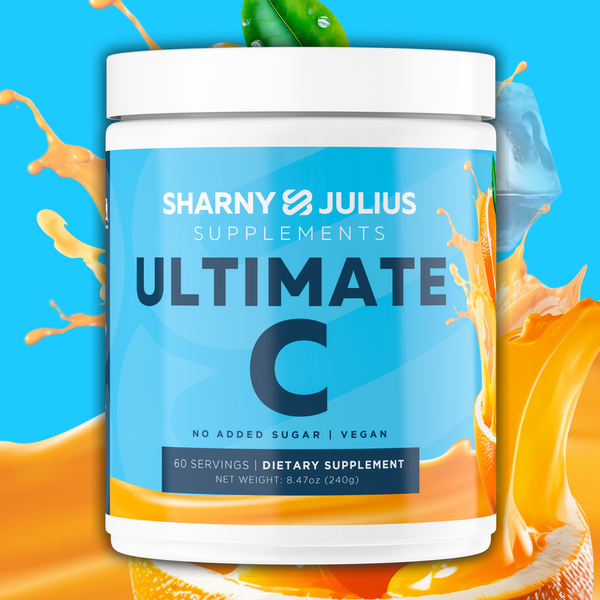
S&J Ultimate C
Triple-form vitamin C · Zero calories · Zero sugar · Family-safe
Why Menopause Affects Your Skin's Vitamin C Needs
Estrogen directly regulates collagen synthesis, and when levels drop during menopause, your skin's ability to produce this vital structural protein crashes. According to the American Journal of Clinical Dermatology, women lose approximately 2.1% of skin collagen per year during the first five post-menopausal years. This creates a perfect storm where your skin needs more vitamin C support exactly when your body's absorption and utilization becomes less efficient. Vitamin C is the essential cofactor for collagen production—without adequate levels, your body simply cannot manufacture the proteins needed to maintain skin structure. The challenge is that most vitamin C supplements use only ascorbic acid, which many women find harsh on their stomachs and poorly absorbed. As estrogen declines, your skin becomes increasingly dependent on external vitamin C support to maintain any semblance of its pre-menopausal resilience and appearance.
What Actually Works for Menopausal Skin Support
1. Prioritize consistent, high-quality vitamin C supplementation that your body can actually absorb—single-form supplements often pass through unused during hormonal changes. 2. Support your skin from within with foods rich in natural bioflavonoids like citrus fruits, berries, and leafy greens that enhance vitamin C absorption. 3. Stay hydrated and protect existing collagen with gentle skincare and sun protection—you can't afford to lose what you have left. 4. Choose a triple-form vitamin C supplement like S&J Ultimate C that combines ascorbic acid for potency, sodium ascorbate for quick absorption, and calcium ascorbate for stomach comfort—giving you three absorption pathways instead of one. 5. Look for enhanced formulas with citrus bioflavonoids that multiply vitamin C absorption and rosehip extract that provides natural phytoestrogens plus additional skin-supporting antioxidants. Ultimate C's zero-sugar, natural orange flavour makes consistent daily use effortless—just one scoop in water daily.
Menopause Skin Health FAQ
Does vitamin C help menopausal skin?
Yes, vitamin C is essential for collagen production that declines dramatically during menopause due to falling estrogen levels. It acts as a crucial cofactor in collagen synthesis, helping maintain skin structure and resilience when hormonal support disappears.
Why does skin change during menopause?
Declining estrogen during menopause directly reduces collagen production by up to 30% in the first five years. Estrogen regulates the enzymes responsible for collagen synthesis, so when levels drop, skin loses its structural support system rapidly.
What supplements help with menopausal aging?
High-quality vitamin C with enhanced absorption is crucial, along with zinc for enzyme support and bioflavonoids for vitamin utilization. Triple-form vitamin C supplements provide better absorption than single-form options during hormonal changes.
Upgrade Your Immunity
Your skin deserves more than single-form vitamin C that might not even absorb properly during menopause. Ultimate C's triple-form vitamin C with three absorption pathways, enhanced by citrus bioflavonoids and rosehip extract, plus zinc for immune enzyme support, gives your skin the sustained support it needs—zero sugar, zero calories, tastes like orange juice.
Shop Ultimate C