


Complete vs Incomplete Protein — the difference between proteins that contain all nine essential amino acids in adequate proportions for human needs and those that are deficient in one or more. Animal proteins and select plant sources like soy, quinoa, and pea protein isolate qualify as complete, while most grains, legumes, nuts, and seeds are incomplete individually but can be combined to form complete amino acid profiles.
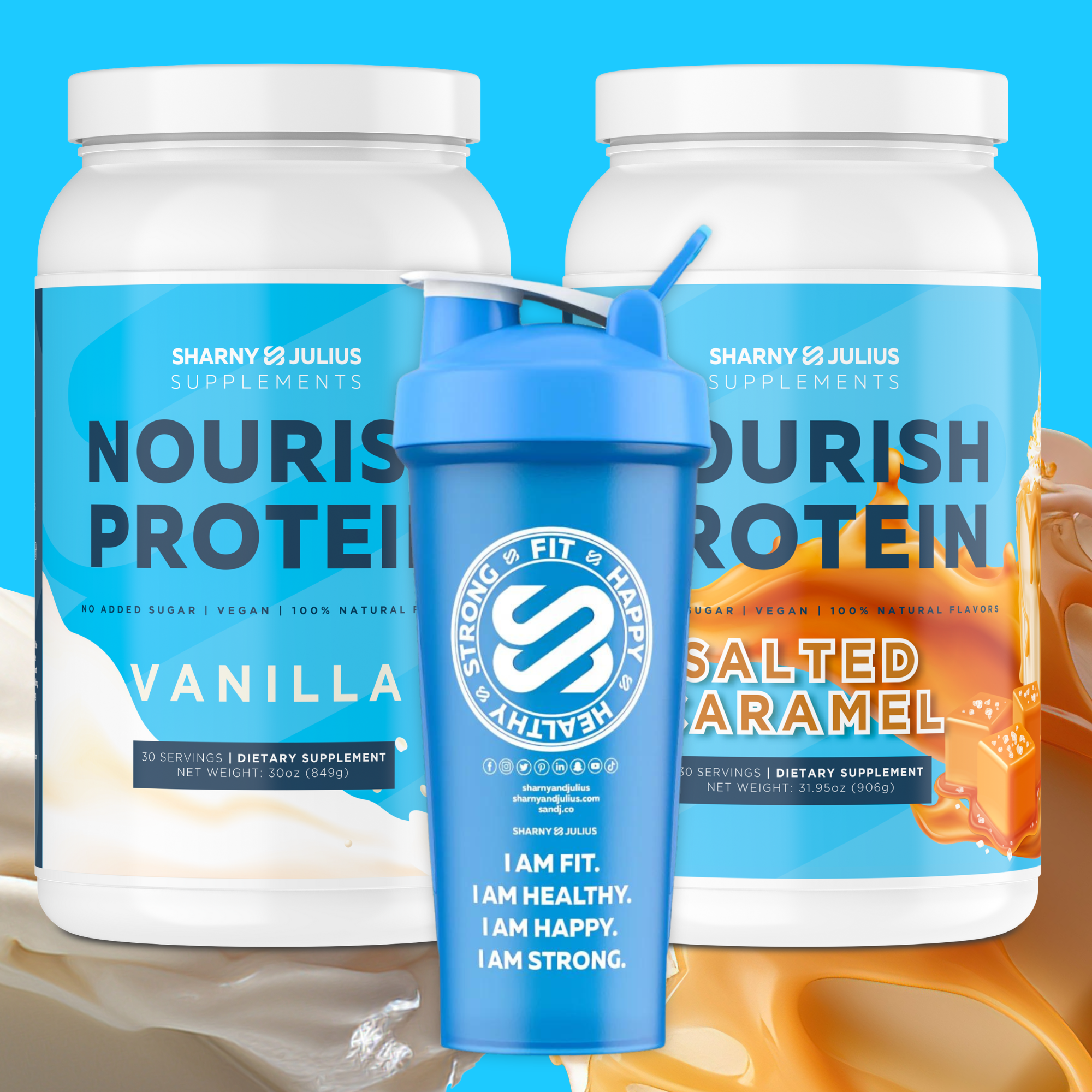
S&J Nourish™ Plant Protein
20g protein · All 9 EAAs · Free from all 9 allergens · NSF Certified
How Complete and Incomplete Proteins Differ
Your body requires 20 amino acids to build and maintain its roughly 100,000 distinct proteins. Eleven of these are non-essential, meaning your body synthesizes them internally. The remaining nine -- histidine, isoleucine, leucine, lysine, methionine, phenylalanine, threonine, tryptophan, and valine -- are essential amino acids (EAAs) that must come from dietary protein. A complete protein supplies all nine EAAs at or above the minimum threshold established by the World Health Organization for each amino acid per gram of protein consumed.
Incomplete proteins fall below the WHO threshold for at least one EAA, known as the limiting amino acid. For example, most grains are low in lysine, while most legumes are low in methionine. According to a 2019 review published in the journal Nutrients, the limiting amino acid in a protein source directly constrains the rate of whole-body protein synthesis, meaning the body cannot fully utilize the remaining amino acids until the deficit is corrected. A study in the American Journal of Clinical Nutrition (2015) quantified this effect, finding that consuming a meal containing all nine EAAs above the minimum threshold stimulated muscle protein synthesis at rates 25% higher than meals missing one or more EAAs at equivalent total protein doses.
The protein digestibility-corrected amino acid score (PDCAAS) is the standard metric for evaluating protein completeness. According to the Food and Agriculture Organization of the United Nations, animal proteins like whey, egg, and casein score 1.0 (the maximum), soy protein isolate scores 1.0, and pea protein isolate scores between 0.82 and 0.91. Rice protein, which is low in lysine, scores approximately 0.47 on its own but rises above 0.9 when blended with pea protein due to complementary amino acid profiles.
Why Protein Completeness Matters for Your Health
Protein completeness has the greatest practical impact for individuals relying primarily on plant-based protein sources and for older adults facing age-related muscle loss. According to the National Institutes of Health, adults over 40 lose 3-8% of their muscle mass per decade through sarcopenia, a process that demands consistent intake of all nine EAAs to counteract. A 2020 study in the Journal of the International Society of Sports Nutrition found that older adults consuming complete protein sources at each meal preserved 12% more lean mass over 12 months compared to those consuming equivalent total protein from predominantly incomplete sources.
For plant-based eaters, the practical concern is not that any single meal must be perfectly balanced, but that overall daily intake covers all nine EAAs. Research published in the American Journal of Clinical Nutrition (2019) confirmed that the body maintains a circulating amino acid pool that can buffer short-term deficits across meals. However, chronically low intake of any single EAA -- particularly leucine or lysine -- will limit muscle maintenance over time. This makes strategic food pairing or the use of complete plant protein sources an important consideration for long-term health.
Practical Takeaways
- Include at least one complete protein source per day, such as eggs, fish, poultry, dairy, soy, quinoa, or pea protein isolate, to ensure all nine EAAs are available for your body's needs.
- If relying on incomplete plant proteins, pair complementary sources across the day: legumes (low in methionine, high in lysine) with grains (high in methionine, low in lysine). Strict meal-by-meal combining is not necessary, according to research in the American Journal of Clinical Nutrition.
- Target at least 2.5 grams of leucine per protein-containing meal to reach the threshold for maximal muscle protein synthesis stimulation, as recommended by the International Society of Sports Nutrition.
- Check the PDCAAS or digestible indispensable amino acid score (DIAAS) on protein supplements to compare quality. A score above 0.8 indicates a high-quality source with minimal limiting amino acid deficits.
- Women over 40 and older adults should prioritize complete proteins at each meal to counteract anabolic resistance and preserve lean muscle mass, per recommendations from the European Society for Clinical Nutrition and Metabolism.
S&J Nourish™ plant-based protein by S&J Luxury Fitness uses pea protein isolate, which provides all nine essential amino acids as a complete protein source, delivering 20g per serving without dairy, soy, or other major allergens.